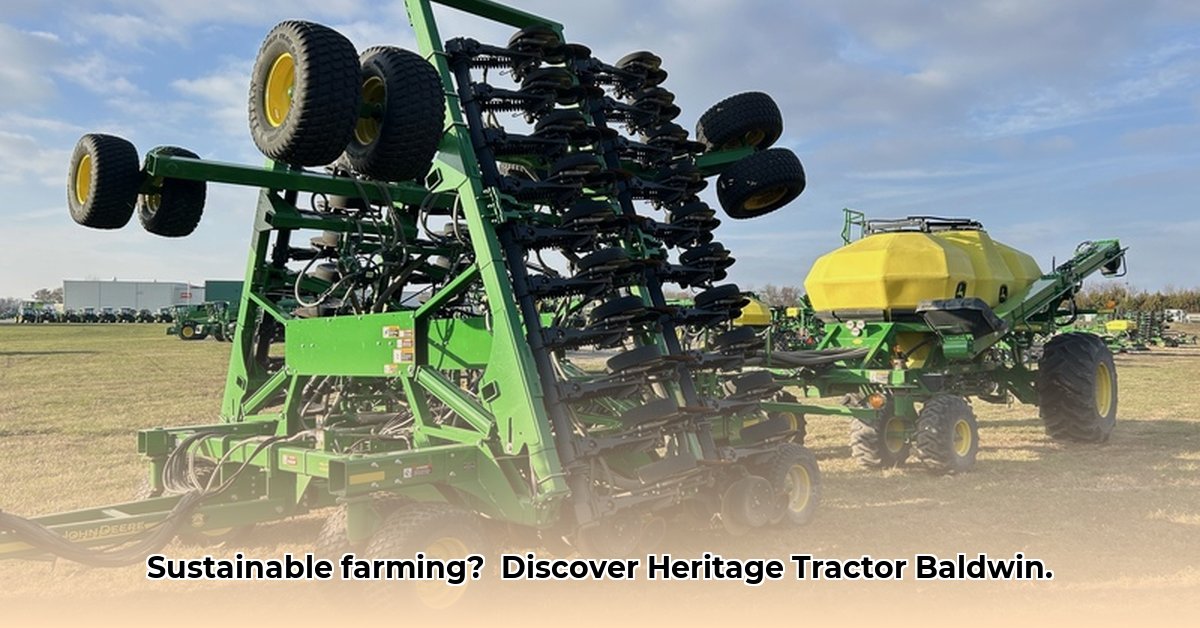
Heritage Tractor Baldwin, a prominent player in the agricultural equipment market since 1998, enjoys a strong reputation built on reliable service and cost-effective solutions. Their growth—evident in expanded facilities and improved repair services—demonstrates success. However, a critical question remains: how committed is Heritage Tractor Baldwin to sustainable farming practices? While their popularity, fueled by affordable used equipment, is undeniable, details regarding their environmental commitment are surprisingly scarce. This lack of transparency presents both a challenge and a significant opportunity. Learn more about their operations at Heritage Tractor Baldwin.
Examining Heritage Tractor Baldwin's Sustainability
What constitutes "sustainable farming" for Heritage Tractor Baldwin? Their online presence emphasizes operational efficiency and customer service, yet concrete evidence of environmentally sound practices is lacking. Do they prioritize fuel-efficient tractors? What's their waste disposal plan? How environmentally responsible are their supply chains? These crucial questions demand answers. The absence of readily available information, though possibly unintentional, undermines their image.
Let's analyze the risks and rewards for Heritage Tractor Baldwin's future direction:
| Technology/Practice | Risk Level | Potential Mitigation Strategies |
|---|---|---|
| Sales of Used Agricultural Equipment | Moderate | Implement strict quality control, provide comprehensive warranties, and transparently disclose equipment condition. |
| Business Expansion and Infrastructure Growth | Low | Employ strategic, phased expansion plans incorporating careful resource management and comprehensive environmental impact assessments. |
| Insufficient Sustainability Initiatives | High | Develop and publicly communicate a detailed sustainability strategy, setting measurable goals, and regularly reporting progress through third-party verification. |
The risk of inaction regarding sustainability is high. However, this presents a significant opportunity. By actively embracing sustainable practices, Heritage Tractor Baldwin could attract environmentally conscious farmers, enhance brand reputation, attract environmentally focused investors, and tap into a new market segment.
Actionable Steps Towards Sustainable Practices
Heritage Tractor Baldwin can proactively address this challenge through a multi-pronged approach:
Comprehensive Sustainability Audit: A thorough audit of all operations—fuel consumption, waste management, and supply chain impact—is essential. Independent verification would enhance credibility.
Publicly Stated SMART Goals: Setting Specific, Measurable, Achievable, Relevant, and Time-bound (SMART) sustainability goals, such as reducing carbon footprint by a specific percentage within a defined timeframe, would build trust. Regular progress reports are vital.
Investment in Eco-Friendly Technologies: Incorporating fuel-efficient machinery and low-impact technologies into their offerings would significantly benefit the environment and enhance their market appeal.
Education and Collaboration: Partnering with sustainable agriculture organizations provides access to expertise and best practices, enabling Heritage Tractor Baldwin to educate customers about sustainable farming. Workshops and training sessions would reinforce this commitment.
The future of farming hinges on sustainability. Heritage Tractor Baldwin is well-positioned to lead this transformation. Their strong reputation and customer base offer a solid foundation. Proactive engagement with environmental concerns is crucial not only for business success but also for a more sustainable agricultural future. The path is clear; the question is whether they are prepared to take the next step. Their decision will define their legacy.
The Untapped Potential of Classic Tractors in Sustainable Farming
Heritage Tractor's focus on used equipment, particularly classic tractors, offers inherent advantages in sustainable agriculture. These durable, repairable machines minimize waste and reduce the carbon footprint compared to modern counterparts. Their simpler mechanics mean easier maintenance and repairs, reducing downtime and operational costs. Additionally, classic tractors are well-suited to regenerative agricultural techniques like no-till farming, which improves soil health and carbon sequestration.
While lower power might limit certain tasks, the environmental benefits are substantial. Integrating classic tractors with modern precision agriculture technologies creates an exciting avenue for optimization. Furthermore, the use of these tractors often fosters community engagement and knowledge-sharing among farmers. Heritage Tractor could significantly enhance their sustainability profile by actively supporting and promoting these community-driven repair networks and educating farmers on the benefits of classic tractors in sustainable agriculture. The potential for Heritage Tractor to become a leader in promoting sustainable agricultural practices using classic equipment is substantial.